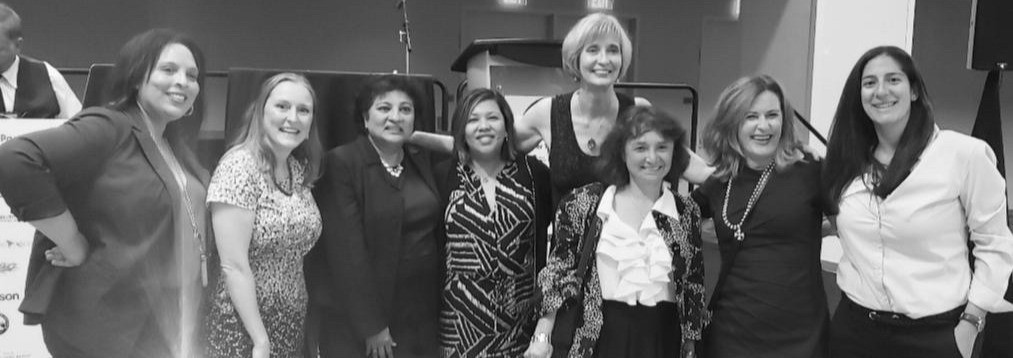
Today, Women In Logistics Norcal (Women in Logistics: WIL) stands as one of the San Francisco Bay Area's enduring professional organizations within the transportation and supply chain industry, bringing together members from logistics, maritime shipping, freight forwarding, technology, and global trade. Under the leadership of President Laura Germany of the Pacific Merchant Shipping Association, the organization supports professional development, mentorship, industry dialogue, and educational opportunity through scholarships and networking programs.
Women in Logistics, formally founded by Stacy Roth in 1981, is a professional organization dedicated to advancing all individuals in transportation, logistics, and global trade through education, leadership development, and industry connection. Rooted in San Francisco's long-standing role as a Pacific gateway, WIL's origins reflect more than a century of enduring efforts to build a professional community through the evolution of the transportation industry.
The Founding of Women in Logistics (1981)
By the late 1970s and early 1980s, a new generation of women working in transportation and logistics sought a professional organization aligned with contemporary career ambitions and industry developments. When Stacy Roth, founder of what would become Women in Logistics, evaluated the existing organization, known as the Women's Traffic Club, she found that its programming had shifted away from professional development and toward primarily social activities. For women seeking industry insight and business connections, a new organization was required to match the needs of women navigating the globalized transportation sector.
At the time, women in transportation continued to face structural barriers to advancement. Management positions and influential industry relationships remained largely held by men. Critical business discussions often occurred in private associations and via informal networks from which women were often excluded, limiting access to mentorship and decision-making influence.
In an effort to build new professional networks, Roth circulated flyers to approximately fifty women working in the transportation industry, inviting them to explore the formation of a new professional organization. Eight women attended the first meeting in 1981, marking the founding moment of Women in Transportation, the organization that would later become Women in Logistics.
Early meetings took the form of roundtable discussions in which participants defined a shared vision. It quickly became clear that women needed a professional environment for networking, opportunities to build meaningful business relationships, and access to current industry knowledge, trends, and strategic dialogue. From this foundation, Women in Transportation was born and later formally incorporated as Women in Logistics, Inc. (doing business as Women in Transportation).
Early programming emphasized dynamic, issue-driven content. Meetings evolved into a combination of seminars and quarterly dinners featuring industry speakers. Topics reflected the geopolitical and operational challenges of the era, including:
- Intermodalism in a Deregulated Environment
- Business Opportunities in Eastern Europe
- Developing Quality Partnerships in Transportation
With pro bono legal support secured through the efforts of early champions Jill Simpson and Joan Murphy, the organization was formally incorporated as a California nonprofit in July 1997, establishing a stable institutional foundation for long-term growth.
Rebuilding and Growth
By the early 1990s, Women in Transportation reached a critical inflection point as membership declined significantly. Faced with the possibility of dissolution, the organization instead chose to reorganize and rebuild. Under the leadership of Jill Simpson, who became President in 1994, a committed group of officers (including Melvin Wong, Terry White, Joan Murphy, and Nancy Wagner of the San Francisco Bar Pilots) revitalized the organization. Programming was re-energized with timely, forward-looking topics designed to meet the needs of professionals adapting to globalization and regulatory change. These included:
- Marketing and Sales in the 1990s
- Building Global Competence
- NAFTA and Career Opportunities
Notable speakers during this period included Nancy Wagner, the first woman bar pilot in the United States, and Consul General Hagar El-Islambouli, Consul General of Egypt. Signature events such as the Maritime Luncheon continued, reinforcing WIL's visibility and credibility within the industry.
By the mid-1990s, the organization had rebuilt a strong and diverse membership base. The 1996 membership list included approximately 65 individuals representing roughly 35 companies across the logistics and trade ecosystem. These included major ocean carriers such as APL, A.P. Moller-Maersk, and Mediterranean Shipping Company; rail operators such as Union Pacific Railroad and BNSF Railway; and global logistics providers including DHL and Expeditors International.
National Recognition and Institutional Development
By 1997, Women in Logistics entered a new phase of growth and national visibility. Under the leadership of President Joey Portello, the organization partnered with the Journal of Commerce to host the first National Women in Transportation Convention in San Francisco. Held at the World Trade Club, the two-day event brought together more than two hundred women from across the United States. Nationally recognized industry speakers participated, making it a successful first-of-its-kind gathering dedicated exclusively to women in transportation and logistics.
Women in Logistics played a central role in shaping the program, coordinating speakers and moderators. The Journal of Commerce provided administrative and marketing support and assumed full financial responsibility for the event. In return, Women in Logistics received a share of the proceeds, establishing an early model for strategic partnership and revenue generation. The success of the inaugural convention led to a second National Women in Transportation Convention in 1998 at the Claremont Spa and Hotel in Oakland, further strengthening the organization's national profile.
During this period, the organization formally incorporated as Women in Logistics, Inc. (dba Women in Transportation) and established an Executive Board composed of past presidents and senior leaders to ensure continuity and long-term strategic direction.
Building Influence and Opportunity
Entering the 2000s, Women in Logistics expanded its focus on professional development, leadership visibility, and educational support. Signature initiatives included the establishment of a Golf Tournament fundraiser by Jane Wisdom, which became a sustainable source of scholarship funding. Susan Cholette of San Francisco State University served as Scholarship Director for more than a decade, strengthening ties between academia and the transportation industry.
Leadership during the 2000s further elevated the organization's profile. Karen Vellutini, who led the organization for more than eight years, secured high-profile speakers including Gavin Newsom and California State Controller John Chiang. In earlier years, U.S. Senator Dianne Feinstein also addressed the membership. Through successive leadership, Women in Logistics entered a new era of professionalism, expanded visibility, and continued relevance within a rapidly evolving global transportation industry.
This ongoing initiative extends from the roots of women's professional organizations in the industry, which date back more than a century to the early professionalization of transportation.
A Look Back: The 1920s Origins of Women in Transportation
By 1920, the San Francisco Bay was recognized as the primary traffic center of the West Coast, connecting the United States to Asia through steamship lines, railroads, and expanding industrial trade. That year, students and transportation professionals formed what became the Pacific Traffic Association (later known as the Pacific Transportation Association), dedicated to studying transportation problems and improving cooperation between shippers and carriers.
Although five women were among the Pacific Traffic Association's founding members, the Association later amended its constitution and bylaws to restrict membership to men only. Subsequently, women established their own channels for discussing industry trends. In June 1925, the Women's Traffic Club of San Francisco was formed, becoming the second such organization in the United States, following Los Angeles.
Through twice-monthly meetings, research committees, and lectures by prominent industry and government leaders, the Women's Traffic Club functioned as an active professional institution. The club emphasized educational advancement in transportation, cooperation between shippers and carriers, and mutual professional support.
Membership of the Women's Traffic Club included women working in shipping offices, steamship companies, railroads, and industrial firms. Early leaders such as Zulu Clements (Leslie-California Salt Co: Traffic Manager), Jessie G. Inglis (Norton, Lilly & Co.: Secretary to the Manager), and Harriett P. Tyler (Western Pacific Railroad: Attorney), exemplified the growing presence of women in technical and managerial traffic roles. Over time, as women gained greater access to industry organizations such as the Pacific Traffic Association and the Propeller Club, the Women's Traffic Club gradually evolved into a more social association, creating space decades later for the re-emergence of a professionally focused organization: Women in Logistics.
Legacy
From the founding of the Pacific Transportation Association in 1920, to the Women's Traffic Club in 1925, and the establishment of Women in Logistics in 1981, women have played a critical role in shaping the transportation industry in the San Francisco Bay Area. Like any enduring professional organization, WIL reflects the cumulative efforts of generations of members who invested their time and energy to ensure that the group remained relevant and valuable to the industry.
The few individuals named throughout this history helped guide the group's development, alongside countless others whose contributions were also critically important. Over time, the WIL organization became larger than any one individual. It stands as a professional community and institutional legacy that continues to support and shape the transportation and logistics industry today.